
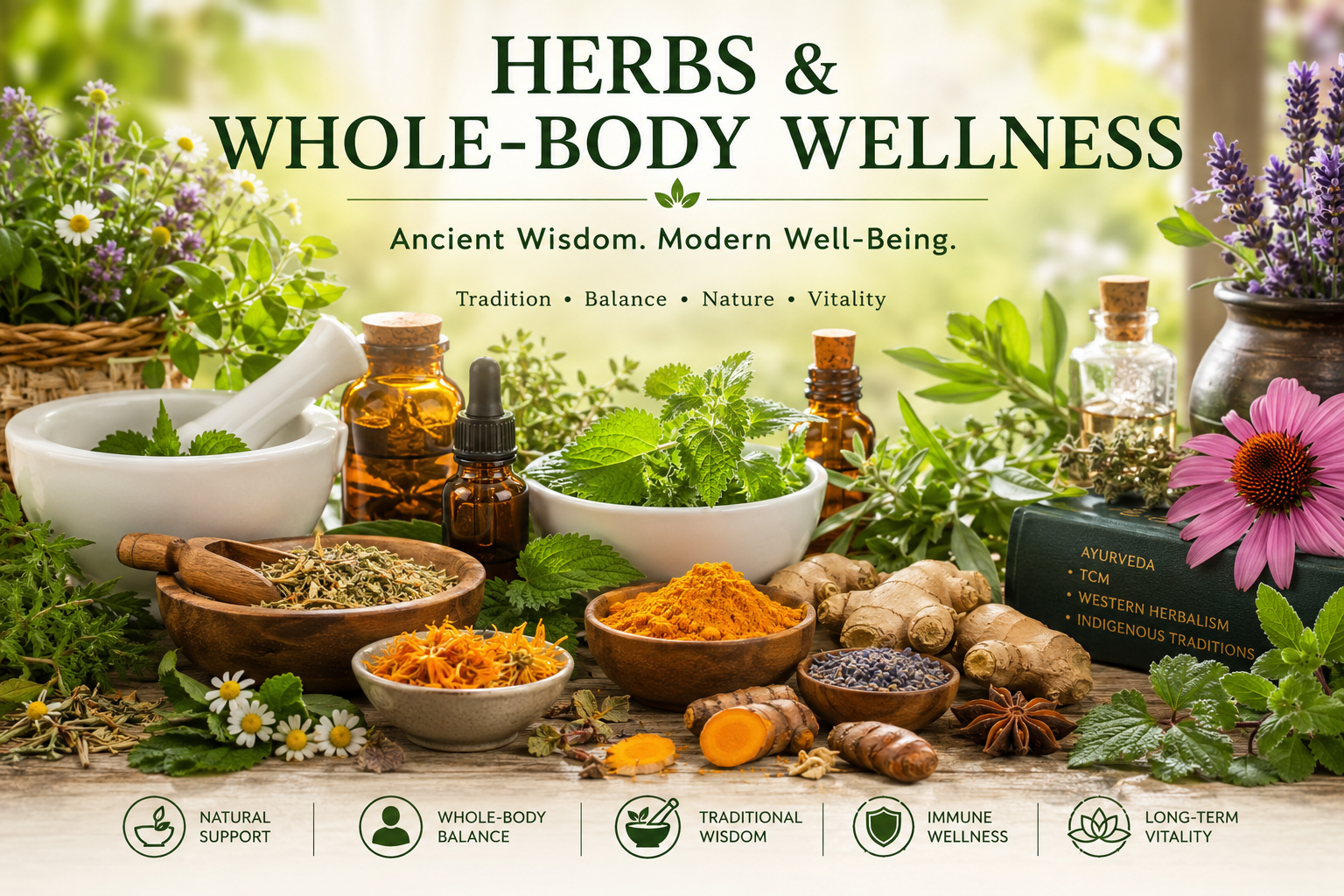
 Long before laboratories, capsules, and modern drugstores, human beings looked to the natural world for support. Leaves, roots, barks, seeds, flowers, mushrooms, and fruits became part of daily wellness traditions across nearly every culture. Herbal knowledge grew from observation: which plants supported digestion, which roots helped the body feel grounded, which bitter herbs encouraged cleansing, which spices warmed circulation, and which botanicals were used during seasonal challenges.
Today, herbs remain an important part of wellness culture around the world. They are not a replacement for medical care, diagnosis, or emergency treatment. Rather, when used wisely, herbs can support the body’s natural rhythms, nourish key systems, and become part of a broader lifestyle that includes clean food, hydration, movement, rest, emotional balance, and responsible healthcare.
The Major Goal of Herbal Wellness
The major goal of using herbs in wellness is not simply to “attack” one symptom. Traditional herbal systems usually look at the whole person: digestion, elimination, energy, circulation, sleep, stress, immune resilience, and the body’s ability to maintain balance.
In many herbal traditions, the body is seen as a living system that constantly works to cleanse, repair, digest, rebuild, and adapt. Herbs are often chosen to support these natural processes rather than force a single isolated effect.
For example, a bitter herb may be traditionally used to support digestion. A mineral-rich leaf may be used to nourish the body. A warming spice may be used to support circulation and digestive fire. A calming root may be used to support relaxation. A cleansing herb may be used as part of seasonal detox traditions.
Herbs vs. Isolated Chemical Compounds
One important difference between herbs and many modern chemical-based medicines is complexity. A pharmaceutical drug is often designed around one isolated active compound with a specific measurable action. This can be extremely useful and sometimes life-saving, especially in acute care, infection management, surgery, emergency medicine, and serious disease treatment.
Herbs, on the other hand, naturally contain many plant compounds working together. A single plant may include antioxidants, bitter principles, minerals, essential oils, flavonoids, tannins, alkaloids, mucilage, resins, and other naturally occurring compounds. This is why herbs are often described as “whole-plant” or holistic support.
Some herbs may interact with medications, may not be appropriate during pregnancy, may affect blood pressure, blood sugar, liver enzymes, or blood clotting, and may not be suitable for certain medical conditions. The wisest approach is respect: herbs are powerful gifts from nature, and powerful tools should be used with knowledge.
A Brief History of Herbal Medicine
Herbal medicine is one of the oldest forms of healthcare known to humanity. Historical reviews describe medicinal plant use as deeply rooted in human history, with plant-based healing traditions appearing in ancient Egypt, China, India, Greece, the Middle East, Europe, Africa, and Indigenous cultures across the world.
Many modern medicines also have roots in the plant world. Plants have inspired or contributed to important pharmaceutical discoveries. This shows that traditional plant knowledge and modern science do not need to be enemies. At their best, they can inform each other.
The modern word “phytotherapy” refers to the use of plants for therapeutic purposes. In Europe, phytotherapy developed as a more formalized field, while in other parts of the world herbs remained integrated into broader healing systems such as Ayurveda, Traditional Chinese Medicine, Indigenous medicine, Unani, Siddha, and Western herbalism.
Major Herbal Traditions Around the World
1. Ayurveda
Ayurveda is the traditional wellness system of India. It focuses on balance, constitution, digestion, daily routine, seasonal living, and the relationship between body, mind, and environment. Ayurvedic herbs are often chosen based on energetic qualities such as warming, cooling, drying, moistening, grounding, or stimulating.
Well-known Ayurvedic herbs include turmeric, ashwagandha, amla, triphala, holy basil, neem, ginger, and guduchi. These herbs are commonly used in traditional wellness routines for digestion, stress support, immune balance, cleansing, and vitality.
2. Traditional Chinese Medicine
Traditional Chinese Medicine, often called TCM, uses herbs as part of a complete system that also includes acupuncture, food therapy, movement, breath practices, and lifestyle guidance. TCM looks at patterns of imbalance rather than isolated symptoms alone.
Commonly known herbs and botanicals in this tradition include astragalus, ginseng, licorice root, reishi mushroom, goji berry, ginger, schisandra, and dong quai. Many formulas are built with several herbs working together in a balanced structure.
3. Western Herbalism
Western herbalism developed through European, Mediterranean, and later North American traditions. It includes the use of roots, leaves, flowers, berries, barks, and resins for daily wellness and traditional household care.
Well-known Western herbs include dandelion, nettle, burdock, elderberry, echinacea, peppermint, chamomile, milk thistle, yarrow, plantain leaf, red clover, and slippery elm.
4. Indigenous Herbal Traditions
Indigenous cultures around the world developed deep relationships with local plants through direct observation, ceremony, food, seasonal living, and community knowledge. These traditions often view plants not only as substances, but as living allies connected to land, culture, and responsibility.
Many plants now used globally were first understood through Indigenous knowledge systems. Respect for origin, sustainability, and ethical sourcing is essential when discussing these traditions.
5. Unani, Siddha, African, Caribbean, and Latin American Herbal Traditions
Other rich herbal systems include Unani medicine, Siddha medicine, African traditional medicine, Caribbean bush medicine, and Latin American herbal traditions. These systems often combine local plants, food-based remedies, warming and cooling principles, cleansing practices, and generational knowledge.
Examples of Well-Known Herbs and Their Traditional Uses
The following examples are for educational purposes only. They are not medical advice and are not intended to diagnose, treat, cure, or prevent any disease.
Turmeric
Turmeric is a golden root widely used in Ayurveda, cooking, and modern wellness. It is traditionally associated with joint comfort, digestive support, liver support, and healthy inflammatory balance. Curcumin, one of turmeric’s well-known compounds, has been widely studied, but whole turmeric also contains many other natural constituents.
Ginger
Ginger is a warming root used across many cultures. Traditionally, it has been used to support digestion, circulation, nausea comfort, and warmth in the body. Ginger is also commonly used in teas, tonics, foods, and seasonal wellness formulas.
Dandelion Root and Leaf
Dandelion is often viewed as a common weed, but herbal traditions value both the root and leaf. Dandelion root is traditionally used to support liver and digestive function, while the leaf is mineral-rich and often associated with fluid balance and kidney support.
Nettle Leaf
Nettle is a nutrient-rich green herb traditionally used for mineral support, seasonal wellness, and general nourishment. It contains naturally occurring minerals and plant compounds and is often used as a tea or liquid extract.
Milk Thistle
Milk thistle is best known for its traditional association with liver support. Its seed contains silymarin compounds that have been studied for their relationship to liver health and antioxidant activity.
Elderberry
Elderberry has a long history of traditional use during seasonal challenges. It is commonly used in syrups, teas, and extracts as part of immune-supportive routines.
Echinacea
Echinacea is a well-known North American plant traditionally used for immune support, especially during seasonal wellness routines. Different parts of the plant may be used, including root and aerial portions.
Peppermint
Peppermint is traditionally used to support digestion, freshen breath, and provide a cooling sensation. Peppermint tea is one of the most familiar household herbal preparations.
Chamomile
Chamomile is a gentle flower traditionally used for relaxation, digestive comfort, and evening routines. It is one of the most popular herbal teas worldwide.
Ashwagandha
Ashwagandha is a famous Ayurvedic root traditionally used as an adaptogen, meaning it is used to support the body’s response to stress and promote resilience. It is commonly included in formulas for calm energy, sleep support, and vitality.
Holy Basil
Holy basil, also known as tulsi, is treasured in Ayurveda. It is traditionally used to support stress balance, respiratory wellness, and daily vitality. It is commonly enjoyed as tea.
Black Walnut, Wormwood, and Clove
These herbs are well-known in traditional cleansing formulas. Black walnut hull, wormwood, and clove are often discussed together in herbal cleansing traditions. For educational purposes, they are commonly associated with digestive cleansing and internal balance routines.
Why Herbs Are Often Used in Formulas
Many herbal traditions do not use herbs one at a time. Instead, herbs are combined into formulas. The idea is that one herb may support the main goal, another may support digestion or absorption, another may balance the formula, and another may make it gentler or more complete.
For example, a cleansing formula may include bitter herbs, aromatic herbs, mineral-rich herbs, and digestive support herbs. A calming formula may include relaxing roots, soothing flowers, and nourishing adaptogens. A digestive formula may include bitters, warming spices, and soothing herbs.
This formula-based approach reflects a whole-body philosophy: support the terrain, not only the symptom.
When to Expect the Full Effect of Herbs
Herbs do not always work like fast-acting chemical medicines. Some herbs may be felt quickly, especially aromatic herbs, bitters, digestive herbs, or calming teas. For example, peppermint, ginger, chamomile, or bitter herbs may support digestion or relaxation within a short time as part of a daily routine.
Other herbs work more gradually. Tonic herbs, adaptogens, cleansing herbs, mineral-rich herbs, and formulas designed to support deeper body systems are usually taken consistently over time. In traditional herbal practice, many people look for a clearer, more noticeable effect after several weeks of regular use. A common practical window is about 6 to 8 weeks, or roughly two months, especially for formulas intended to support long-term balance, resilience, cleansing, stress response, immune wellness, or overall vitality.
This does not mean every herb reaches its “maximum effect” at exactly two months. The timeline depends on the herb, the quality of the formula, serving size, consistency, digestion, lifestyle, hydration, diet, sleep, and the individual person. Some herbs may be used short term, while others are traditionally used in cycles or longer wellness routines. The most important factor is consistency: herbs often work best when they are taken regularly and supported by clean food, proper hydration, rest, and healthy daily habits.
Herbs, Food, and Daily Life
Many herbs are also foods. Garlic, ginger, turmeric, cinnamon, parsley, cilantro, oregano, thyme, rosemary, fennel, cayenne, and peppermint are all examples of plants that may appear in the kitchen and in traditional wellness practices.
This is one of the beautiful things about herbs: they can connect wellness to daily life. A cup of ginger tea, a mineral-rich nettle infusion, turmeric in food, bitter greens before a meal, or peppermint after dinner can all become simple rituals of care.
The Modern View: Tradition Plus Evidence
Modern science has renewed interest in traditional medicine and herbal research. The World Health Organization recognizes the growing global role of traditional, complementary, and integrative medicine and has emphasized the importance of safety, quality, evidence, and people-centered care.
This matters because herbal wellness should not be based only on romantic ideas about the past. It should also include quality control, responsible sourcing, safety awareness, honest labeling, research, and respect for individual health conditions.
Important Safety Considerations
Herbs can be supportive, but they should be used responsibly. Always consider the following:
- Speak with a qualified healthcare professional if you are pregnant, nursing, taking medication, or managing a health condition.
- Be especially cautious with herbs if you take blood thinners, blood pressure medication, blood sugar medication, sedatives, immune-suppressing drugs, or liver-metabolized medications.
- Start slowly when trying a new herbal product.
- Use high-quality products from trusted sources.
- Remember that herbs support wellness; they are not a substitute for emergency care or prescribed medical treatment.
Final Thought: Plants as Partners in Wellness
Herbs are not magic bullets. They are not meant to replace common sense, medical care, healthy food, movement, rest, or emotional balance. But they can be powerful partners in a wellness lifestyle.
Across history, people have turned to plants for nourishment, cleansing, comfort, resilience, and vitality. Today, we have the opportunity to honor that ancient wisdom while also applying modern standards of quality, safety, and research.
The best herbal approach is not extreme. It is balanced, respectful, informed, and consistent. Herbs work best when they are part of a larger commitment to living cleanly, eating naturally, supporting the body’s own intelligence, and staying connected to the healing power of nature.
Educational Disclaimer
This article is for educational purposes only. It is not intended to diagnose, treat, cure, or prevent any disease. Herbal products and dietary supplements are not a substitute for professional medical care. Always consult a qualified healthcare professional before using herbs or supplements, especially if you are pregnant, nursing, taking medication, or managing a medical condition.
References
- National Center for Complementary and Integrative Health. “Herbs at a Glance.”
- National Center for Complementary and Integrative Health. “Ayurvedic Medicine: In Depth.”
- National Center for Complementary and Integrative Health. “Turmeric: Usefulness and Safety.”
- National Center for Complementary and Integrative Health. “Ashwagandha: Usefulness and Safety.”
- World Health Organization. “Global Traditional Medicine Strategy 2025–2034.”
- World Health Organization. “Traditional medicine has a long history of contributing to conventional medicine and continues to hold promise.”
- Petrovska, B. B. “Historical review of medicinal plants’ usage.” Pharmacognosy Reviews, 2012.
- Encyclopaedia Britannica. “Phytotherapy.”