
VeggieVerve Knowledge Base
What is your body asking for today?
Beyond Vitamins: The Power of Plant Polyphenols
Table of Contents
-
- What Are Polyphenols?
- Why Color Matters
- Polyphenols and Antioxidant Support
- Polyphenols and the Gut Microbiome
- Polyphenols, Inflammation, and Recovery
- Why Whole Plants Matter
- Bioavailability: Why Absorption Is Not Always Simple
- Best Food Sources of Polyphenols
- Polyphenols and Daily Wellness
- How to Add More Polyphenols Every Day
- A Note About Supplements and Herbal Extracts
- The Bottom Line
- References & Footnotes
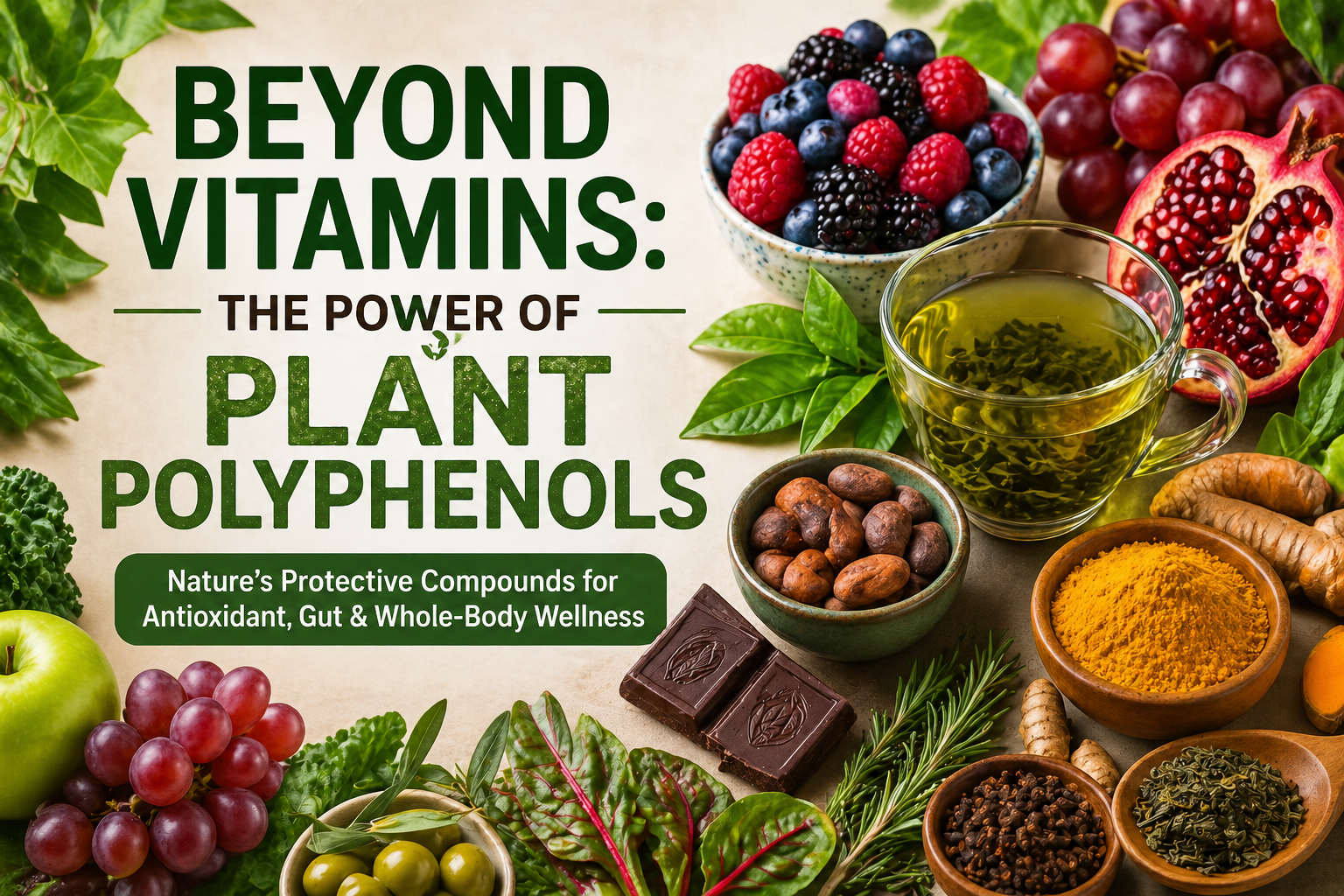
When people think about nutrition, they often think first about vitamins and minerals: vitamin C, vitamin D, iron, magnesium, calcium, and B12. These nutrients are essential, but they are only part of the story.
Plants contain thousands of natural compounds that do not always appear on a standard supplement facts label. One of the most important groups is called polyphenols — protective plant compounds found in colorful fruits, vegetables, herbs, teas, spices, cacao, berries, seeds, and many traditional botanicals.
Polyphenols help explain why whole plant foods and herbs can be so powerful. They are part of what gives plants their color, bitterness, aroma, and natural resilience. In the human diet, they are studied for their antioxidant activity, gut microbiome interactions, and role in supporting healthy inflammatory balance.1,2
What Are Polyphenols?
Polyphenols are naturally occurring compounds made by plants. In nature, they help plants defend themselves against stress, sunlight, insects, microbes, and environmental challenges.
In food and herbs, polyphenols are found in many familiar plant sources, including:
- Berries
- Grapes
- Apples
- Pomegranate
- Green tea and black tea
- Cacao
- Turmeric
- Cloves and cinnamon
- Olive oil
- Beans and lentils
- Nuts and seeds
- Leafy greens
- Medicinal herbs and botanical extracts
Scientists have identified thousands of polyphenols, and they are commonly grouped into major families such as flavonoids, phenolic acids, stilbenes, and lignans.1
That may sound technical, but the practical message is simple: a colorful, plant-rich diet gives the body more than vitamins — it also delivers a wide range of protective plant compounds.
Why Color Matters
The colors in plants often signal the presence of phytonutrients, including polyphenols.
Deep purple berries, dark leafy greens, golden turmeric, red grapes, green tea, cacao, and richly colored herbs all contain unique compounds that interact with the body in different ways.
For example:
- Blueberries and elderberries contain anthocyanins
- Green tea contains catechins
- Turmeric contains curcuminoids
- Grapes contain resveratrol and other polyphenols
- Cacao contains flavanols
- Apples contain quercetin and related compounds
- Extra virgin olive oil contains phenolic compounds
This is why nutritional variety matters. No single plant provides everything. Different colors, flavors, and plant families bring different compounds to the table.
Polyphenols and Antioxidant Support
One of the most well-known roles of polyphenols is their connection to antioxidant activity.
Oxidative stress happens when the body produces more reactive molecules, often called free radicals, than it can comfortably balance. Some oxidative activity is normal and even necessary. It is part of metabolism, exercise adaptation, immune response, and normal cell signaling.
The concern is long-term imbalance.
Polyphenols are studied because they may help support the body’s antioxidant defense systems and influence pathways involved in oxidative stress and inflammatory balance.1,3
However, it is important to understand that polyphenols do not simply act like tiny “sponges” that neutralize free radicals directly. Their effects are more complex. Many polyphenols appear to work by interacting with cell signaling pathways, gut microbes, enzymes, and the body’s own defense systems.2,3
In other words, polyphenols are not just “antioxidants” in a simple sense. They are plant messengers that may help the body maintain balance.
Polyphenols and the Gut Microbiome
One of the most exciting areas of polyphenol research is the gut microbiome.
The gut microbiome is the community of bacteria and other microorganisms living in the digestive tract. These microbes help break down food compounds, produce metabolites, interact with immune cells, and influence digestion and overall wellness.
Polyphenols and the gut microbiome have a two-way relationship:
- Polyphenols can influence gut bacteria.
Some polyphenols may help support the growth of beneficial bacteria while discouraging less desirable microbes. - Gut bacteria help transform polyphenols.
Many polyphenols are not fully absorbed in their original form. Gut microbes can break them down into smaller compounds that may be easier for the body to use.
This means the benefits of polyphenols may depend partly on gut health, microbial diversity, and regular dietary intake. Reviews describe this as a reciprocal relationship between dietary polyphenols and the gut microbiota.4,5
This is also one reason whole-food patterns matter. Fiber, herbs, berries, greens, fermented foods, and diverse plant intake can work together to support a healthier internal environment.
Polyphenols, Inflammation, and Recovery
Inflammation is not always bad. Short-term inflammation is part of the body’s repair and recovery process. It helps the body respond to stress, training, injury, and normal immune challenges.
The issue is not inflammation itself — the issue is imbalance.
Polyphenol-rich foods and botanicals are widely studied for their role in supporting a healthy inflammatory response. This is especially relevant for active people, older adults, and anyone interested in long-term wellness and recovery.3,6
For example, polyphenols from berries, turmeric, green tea, cacao, olive oil, and herbs have been studied for their effects on markers related to oxidative stress, vascular function, metabolism, and inflammatory pathways.1,3,6
This does not mean polyphenols “treat inflammation” or replace medical care. A better way to say it is: polyphenol-rich plants may help support the body’s natural balance and recovery systems as part of a healthy lifestyle.
Why Whole Plants Matter
Modern nutrition often isolates single compounds: one vitamin, one mineral, one active ingredient.
But plants are more complex than that.
A single berry, leaf, root, seed, or herb may contain vitamins, minerals, fiber, essential oils, bitter compounds, pigments, and multiple families of polyphenols. These compounds may work together in ways that are not fully captured by studying one isolated nutrient.
This is why whole plant nutrition and full-spectrum botanical formulas are so interesting. They provide a broader range of plant compounds, not just one nutrient.
For example:
- Moringa provides green plant nutrients and antioxidant compounds
- Turmeric provides curcuminoids and other root compounds
- Berries provide anthocyanins and flavonoids
- Soursop contains unique plant phytochemicals
- Green tea provides catechins
- Cacao provides flavanols
- Herbs provide bitter, aromatic, and polyphenol-rich compounds
The value of plants is not only in what appears on a basic nutrition label. Much of the value is in the plant’s natural complexity.
Bioavailability: Why Absorption Is Not Always Simple
One important point about polyphenols is bioavailability — how well the body absorbs and uses them.
Many polyphenols are not highly absorbed in their original form. Some pass into the colon, where gut bacteria transform them into smaller metabolites. These metabolites may then interact with the body in meaningful ways.5
This means polyphenol benefits depend on more than just the amount consumed. They may also depend on:
- Gut microbiome composition
- Food preparation
- Food combinations
- Fiber intake
- Individual digestion
- Regularity of intake
- Overall dietary pattern
This is why consistency matters. A cup of green tea once a month is not the same as a steady lifestyle pattern rich in herbs, berries, vegetables, teas, spices, and whole plant foods.
Best Food Sources of Polyphenols
A plant-rich diet is the best foundation for polyphenol intake.
Berries
Blueberries, blackberries, strawberries, raspberries, elderberries, and aronia berries are rich in colorful polyphenols, especially anthocyanins.
Herbs and Spices
Cloves, cinnamon, oregano, rosemary, thyme, turmeric, ginger, and many traditional herbs contain concentrated plant compounds.
Tea
Green tea and black tea provide catechins, theaflavins, and related polyphenols.
Cacao
Unsweetened cacao and dark chocolate contain flavanols. Choose low-sugar options when possible.
Pomegranate and Grapes
These fruits provide a variety of polyphenols, including tannins, anthocyanins, and resveratrol-related compounds.
Olive Oil
Extra virgin olive oil contains phenolic compounds that are part of the traditional Mediterranean diet pattern.
Beans, Lentils, Nuts, and Seeds
These foods provide fiber, minerals, and polyphenols together.
Leafy Greens and Colorful Vegetables
Greens, red cabbage, onions, peppers, and other vegetables contribute different plant compounds and support dietary diversity.
Polyphenols and Daily Wellness
Polyphenols are not magic bullets. They are not quick fixes. Their real power comes from repeated exposure through a healthy, plant-rich lifestyle.
A polyphenol-rich routine may support:
- Antioxidant defenses
- Healthy inflammatory balance
- Gut microbiome diversity
- Cardiometabolic wellness
- Healthy aging pathways
- Recovery from daily stress
- Overall plant-based nutrition
Large reviews suggest that higher polyphenol intake is associated with several favorable health outcomes, although researchers continue to debate exact effective amounts, best sources, and individual differences.6
The most practical takeaway is not to chase one “superfood.” Instead, build a colorful pattern.
How to Add More Polyphenols Every Day
Here are simple ways to increase polyphenol intake naturally:
- Eat more color.
Add berries, greens, purple cabbage, beets, herbs, and colorful vegetables. - Use herbs generously.
Oregano, rosemary, thyme, turmeric, ginger, cinnamon, and cloves are small but powerful additions. - Drink tea.
Green tea, black tea, hibiscus, and herbal teas can be daily sources of plant compounds. - Choose whole plants over refined foods.
Whole grains, beans, lentils, nuts, seeds, fruits, and vegetables bring fiber and polyphenols together. - Rotate your plants.
Variety helps expose the body and microbiome to a broader range of compounds. - Support your gut.
Fiber-rich foods help create a better environment for polyphenol metabolism. - Be consistent.
Polyphenols work best as part of a lifestyle pattern, not an occasional trend.
A Note About Supplements and Herbal Extracts
Polyphenol-rich supplements and botanical extracts can be useful additions to a wellness routine, especially for people who want concentrated support from specific plants.
However, more is not always better. Some concentrated extracts may interact with medications, affect digestion, or be inappropriate for certain health conditions. Anyone who is pregnant, nursing, taking medication, managing a medical condition, or preparing for surgery should consult a qualified healthcare professional before using concentrated herbal supplements.
The best foundation is still a colorful, diverse, whole-food diet supported by carefully chosen supplements when appropriate.
The Bottom Line
Vitamins and minerals are essential, but they are not the whole story of plant nutrition.
Polyphenols are one reason herbs, fruits, teas, spices, greens, berries, and traditional botanicals have such a long history of use. They support antioxidant activity, interact with the gut microbiome, and may help the body maintain healthy inflammatory balance.
The real lesson is simple: eat the rainbow, use herbs often, support your gut, and choose plant diversity every day.
Plants are more than calories. They are more than vitamins. They are complex living sources of color, flavor, resilience, and wellness-supporting compounds.
References & Footnotes
- Cory H, Passarelli S, Szeto J, Tamez M, Mattei J. The Role of Polyphenols in Human Health and Food Systems: A Mini-Review. Frontiers in Nutrition. 2018. https://pmc.ncbi.nlm.nih.gov/articles/PMC6160559/
- Wang X, et al. Dietary Polyphenol, Gut Microbiota, and Health Benefits. 2022. https://pmc.ncbi.nlm.nih.gov/articles/PMC9220293/
- Rana A, et al. Health Benefits of Polyphenols: A Concise Review. Journal of Food Biochemistry. 2022. https://pubmed.ncbi.nlm.nih.gov/35694805/
- Cardona F, Andrés-Lacueva C, Tulipani S, Tinahones FJ, Queipo-Ortuño MI. Benefits of Polyphenols on Gut Microbiota and Implications in Human Health. Journal of Nutritional Biochemistry. 2013. https://pubmed.ncbi.nlm.nih.gov/23849454/
- Marín L, Miguélez EM, Villar CJ, Lombó F. Bioavailability of Dietary Polyphenols and Gut Microbiota Metabolism: Antimicrobial Properties. BioMed Research International. 2015. https://pmc.ncbi.nlm.nih.gov/articles/PMC4352739/
- Del Bo C, et al. Systematic Review on Polyphenol Intake and Health Outcomes: Is There Sufficient Evidence to Define a Health-Promoting Polyphenol-Rich Dietary Pattern? Nutrients. 2019. https://pmc.ncbi.nlm.nih.gov/articles/PMC6627994/
- Singh AK, et al. Beneficial Effects of Dietary Polyphenols on Gut Microbiota and Strategies to Improve Delivery Efficiency. 2019. https://pmc.ncbi.nlm.nih.gov/articles/PMC6770155/
This article is for educational purposes only and is not intended to diagnose, treat, cure, or prevent any disease. If you have a medical condition, take medication, are pregnant or nursing, or have concerns about nutrient intake, consult a qualified healthcare professional.
- Choosing a selection results in a full page refresh.
- Opens in a new window.