
VeggieVerve Knowledge Base
What is your body asking for today?
Daily Green Energy. Moringa: The Everyday Superfood with Deep Traditional Roots
Table of Contents
- Why Moringa Is Called a Green Superfood
- A Plant with Deep Traditional Roots
- Moringa Leaves: The Most Popular Part
- Moringa and Plant-Based Protein
- Moringa and Minerals
- Moringa and Antioxidant Plant Compounds
- Moringa for Daily Energy and Vitality
- Moringa and Healthy Aging
- Moringa and the Modern Plant-Based Lifestyle
- Why Full-Spectrum Moringa Matters
- How to Use Moringa in a Daily Routine
- Moringa and Taste
- Safety and Smart Use
- The Bottom Line
- References & Footnotes
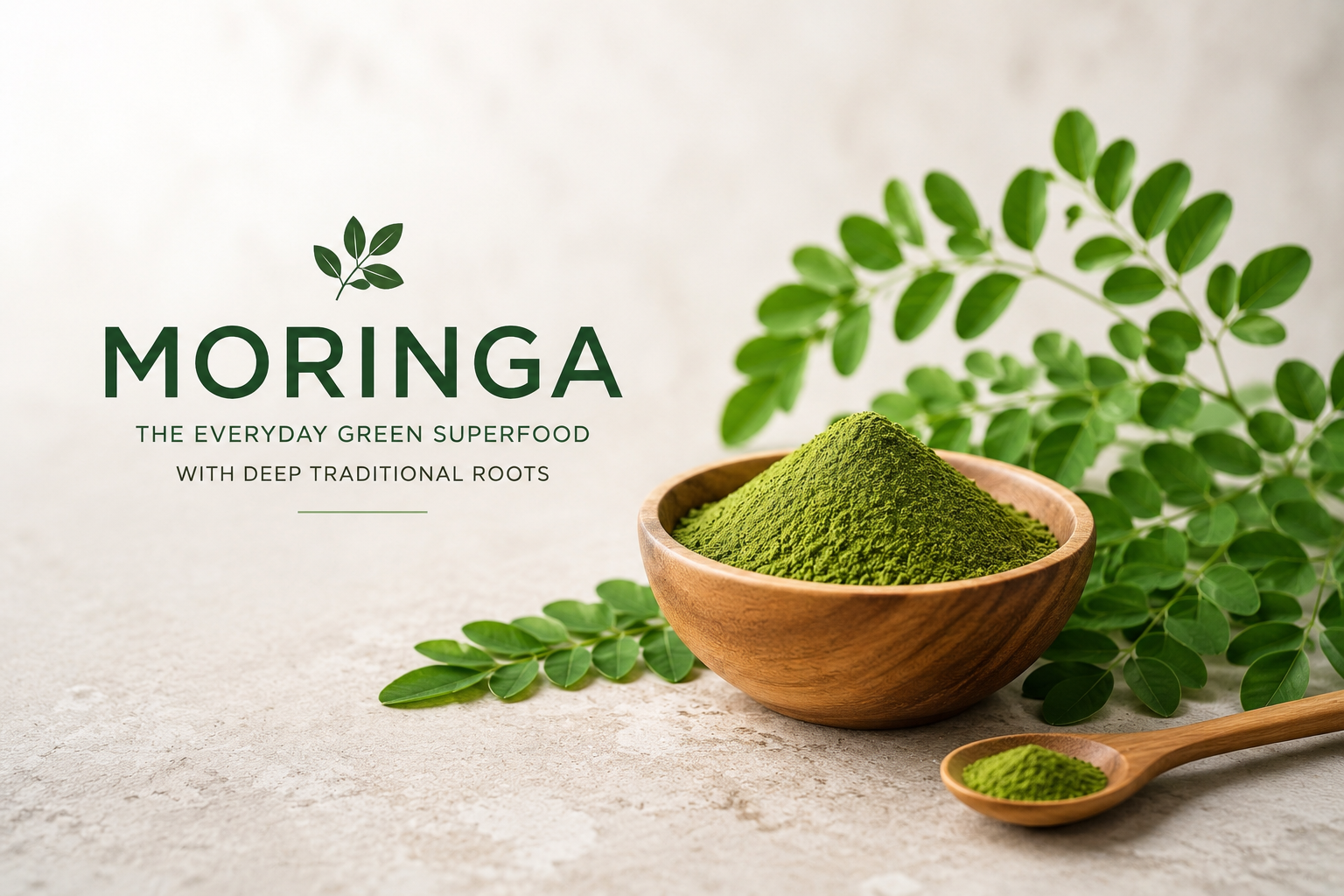
Moringa has earned many names around the world: moringa tree, drumstick tree, horseradish tree, and sometimes even “the miracle tree.” While that last name sounds dramatic, it points to something real: moringa has been valued for generations as a deeply nourishing plant with a remarkable nutritional profile.
Known botanically as Moringa oleifera, this fast-growing tree is native to parts of South Asia and is now cultivated in many tropical and subtropical regions. Its leaves, pods, seeds, flowers, and roots have been used in traditional food systems and herbal practices, especially in India, Africa, Southeast Asia, and other warm-climate regions. Modern research continues to explore moringa’s nutritional composition, phytochemicals, antioxidant potential, and role as a functional food.1
For plant-based wellness, moringa is especially interesting because it is not just a single-nutrient supplement. It is a green whole-plant food naturally rich in multiple nutrients and plant compounds.
Why Moringa Is Called a Green Superfood
The term “superfood” is often overused, but moringa deserves attention because the leaves are unusually nutrient-dense.
Research reviews describe moringa leaves as a source of protein, dietary fiber, minerals, vitamins, and bioactive compounds. Studies of moringa leaf powder have reported meaningful amounts of protein, carbohydrates, dietary fiber, beta-carotene, minerals, and antioxidant compounds.2
Moringa leaves may provide:
- Plant-based protein
- Dietary fiber
- Calcium
- Potassium
- Iron
- Magnesium
- Beta-carotene, a vitamin A precursor
- Vitamin C
- Vitamin E
- Polyphenols
- Flavonoids
- Glucosinolates and isothiocyanates
This broad nutritional profile is one reason moringa is often used as a daily wellness plant rather than a short-term “quick fix.”
A Plant with Deep Traditional Roots
Moringa has a long history of traditional use, especially in South Asian food and wellness practices. In India, moringa pods are commonly used in soups and curries, while the leaves may be cooked as greens or dried into powder.
Traditional systems have valued moringa for nourishment, strength, digestion, skin, and overall vitality. Modern reviews describe moringa as a plant with widespread ethnomedicinal use and note that different parts of the tree have been used traditionally in many cultures.1
Today, moringa is popular worldwide as:
- Leaf powder
- Liquid extract
- Capsules
- Tea
- Culinary greens
- Seed oil for skin and hair care
This long history does not mean every traditional use has been fully proven by modern clinical trials. But it does show that moringa has been respected for a long time as both food and botanical support.
Moringa Leaves: The Most Popular Part
When people talk about moringa as a superfood, they are usually talking about the leaves.
Moringa leaves are the most widely used nutritional part of the plant. They can be eaten fresh, cooked, dried, powdered, or extracted. Compared with many other plant leaves, moringa leaves are notable for their concentration of protein, minerals, carotenoids, and antioxidant compounds.5
This makes moringa especially attractive for people who want plant-based nutrition that goes beyond isolated vitamins.
Moringa and Plant-Based Protein
One reason moringa stands out among greens is its protein content.
Many leafy greens are nutritious but not especially protein-rich. Moringa leaves are different. Reviews report that moringa leaf protein content can be relatively high for a leafy plant food, with some studies reporting protein ranges around 19–29% or higher depending on processing, origin, and analysis method.2
For plant-based diets, this matters. Moringa is not a replacement for legumes, tofu, tempeh, nuts, seeds, or complete daily protein planning, but it can be a helpful green addition to a well-rounded routine.
Moringa and Minerals
Moringa is also valued for its mineral content.
Depending on the growing region, harvesting time, drying method, and preparation, moringa leaves may contain minerals such as calcium, potassium, magnesium, and iron.3
These minerals are important for:
- Muscle function
- Bone support
- Red blood cell support
- Fluid balance
- Energy metabolism
- Nerve signaling
This does not mean moringa should be used as the only source of minerals. It means moringa can contribute to a nutrient-rich, plant-based lifestyle.
Moringa and Antioxidant Plant Compounds
Moringa is more than vitamins and minerals. It also contains phytochemicals — natural plant compounds that help give herbs and greens their wellness value.
Research reviews describe moringa as a source of polyphenols, flavonoids, phenolic acids, glucosinolates, isothiocyanates, carotenoids, and other bioactive compounds. These compounds are being studied for antioxidant activity and their influence on pathways related to oxidative stress and inflammatory balance.6
This is where moringa fits beautifully into the idea of “food as daily support.” It provides a combination of green nutrition and plant chemistry that goes beyond a basic nutrition label.
Moringa for Daily Energy and Vitality
Moringa is often associated with energy, but it is important to describe this correctly.
Moringa is not a stimulant like caffeine. Instead, it may support daily vitality by contributing nutrients involved in normal metabolism, red blood cell support, antioxidant balance, and overall nourishment.
People often feel better when their diet is more nutrient-dense, mineral-rich, and plant-diverse. Moringa may support that foundation by adding concentrated green plant nutrition to the daily routine.
A responsible way to say it is: Moringa supports everyday energy by nourishing the body — not by overstimulating it.
Moringa and Healthy Aging
Healthy aging is not about one herb or one supplement. It is about reducing nutritional gaps, supporting antioxidant defenses, maintaining muscle, protecting metabolic health, moving regularly, sleeping well, and eating a colorful diet.
Moringa may fit into this bigger picture because it provides nutrients and phytochemicals that are being studied for antioxidant and cardiometabolic support. Reviews have examined moringa’s potential role in areas such as oxidative stress, lipid metabolism, blood sugar balance, inflammation-related pathways, and general nutritional support. However, many findings still come from laboratory, animal, or preliminary human research, so claims should remain cautious.8
The best way to view moringa is not as a cure, but as a nutrient-dense botanical food that may support the body’s long-term wellness foundations.
Moringa and the Modern Plant-Based Lifestyle
Modern diets can be high in calories but low in nutrients. Many people eat enough food but still do not get enough minerals, fiber, greens, herbs, and phytonutrients.
Moringa helps answer a simple question:
How can I add more green nutrition to my day without making life complicated?
Moringa can be used in:
- Smoothies
- Herbal tonics
- Green juices
- Soups
- Teas
- Capsules
- Liquid extracts
- Daily wellness routines
For people who do not eat enough greens, moringa can be an easy way to add plant compounds and minerals. For vegetarians and vegans, it can be part of a broader strategy that includes legumes, grains, nuts, seeds, B12, iron awareness, omega-3 support, and enough protein.
Why Full-Spectrum Moringa Matters
Many supplements isolate one “active compound.” Moringa is different because its value comes from the whole plant matrix.
A full-spectrum moringa product may contain multiple naturally occurring plant compounds rather than just one isolated ingredient. This is one reason many people prefer moringa as a green superfood: it offers nutritional complexity.
The whole-plant approach may provide:
- Natural plant minerals
- Green pigments
- Polyphenols
- Bitter compounds
- Antioxidant plant chemistry
- Traditional botanical character
This does not mean more is always better. It means the plant’s value comes from its natural complexity.
How to Use Moringa in a Daily Routine
Moringa works best as a consistent wellness habit.
Some people prefer moringa in the morning as part of an energy-support routine. Others use it with meals, in smoothies, or as part of a green supplement protocol.
Simple ways to use moringa include:
- Add moringa powder to a smoothie.
Combine with banana, berries, plant milk, chia seeds, or greens. - Use a liquid moringa extract.
This is convenient for people who want quick daily herbal support. - Drink moringa tea.
A gentle option for people who enjoy herbal rituals. - Pair moringa with a balanced diet.
It works best alongside whole foods, protein, fiber, hydration, and movement. - Start gradually.
Because moringa is nutrient-dense and bitter-green, some people prefer to begin with a smaller serving.
Moringa and Taste
Moringa has a green, earthy, slightly bitter flavor. That bitterness is part of its botanical character.
In traditional diets, bitter greens are often valued because they stimulate the palate and help bring variety to the diet. For modern customers used to sweet flavors, moringa may take a little adjustment.
Good pairings include:
- Lemon
- Ginger
- Apple
- Pineapple
- Berries
- Mint
- Cucumber
- Green tea
- Coconut water
The goal is not to hide moringa completely, but to make it enjoyable enough for consistent use.
Safety and Smart Use
Moringa leaves are widely consumed as food in many parts of the world, and research reviews generally describe moringa leaf products as well tolerated in typical food-like amounts. However, concentrated extracts and higher-dose supplements should still be used thoughtfully.8
People should speak with a qualified healthcare professional before using moringa supplements if they are:
- Pregnant or nursing
- Taking blood sugar medication
- Taking blood pressure medication
- Taking thyroid medication
- Managing kidney disease
- Managing liver disease
- Preparing for surgery
- Giving supplements to children
- Using multiple herbal products at once
Also, not all parts of the moringa plant are used the same way. Leaves are the most common nutritional form, while roots and certain concentrated extracts may raise different safety concerns. Choose reputable products and follow label directions.
The Bottom Line
Moringa is more than a trend. It is a deeply traditional green plant with modern nutritional relevance.
Its leaves provide plant-based protein, minerals, fiber, antioxidant compounds, and phytonutrients that support everyday wellness. For people seeking a simple way to add more green nutrition to their routine, moringa can be a practical and powerful choice.
The best way to understand moringa is this:
It is not a magic cure. It is an everyday green superfood — rooted in tradition, supported by nutrition research, and best used as part of a balanced, plant-rich lifestyle.
References & Footnotes
- Pareek A, Pant M, Gupta MM, et al. Moringa oleifera: An Updated Comprehensive Review of Its Pharmacological Activities, Ethnomedicinal, Phytopharmaceutical Formulation, Clinical, Phytochemical, and Toxicological Aspects. International Journal of Molecular Sciences. 2023. https://pmc.ncbi.nlm.nih.gov/articles/PMC9916933/
- Sultana S. Nutritional and Functional Properties of Moringa oleifera. 2020. https://pmc.ncbi.nlm.nih.gov/articles/PMC7596288/
- Islam Z, Islam SMR, Hossen F, Mahtab-ul-Islam K, Hasan MR, Karim R. Moringa oleifera is a Prominent Source of Nutrients with Potential Health Benefits. International Journal of Food Science. 2021. https://pmc.ncbi.nlm.nih.gov/articles/PMC8373516/
- González-Burgos E, Ureña-Vacas I, Sánchez M, Gómez-Serranillos MP. Nutritional Value of Moringa oleifera Lam. Leaf Powder Extracts and Their Neuroprotective Effects via Antioxidative and Mitochondrial Regulation. Nutrients. 2021. https://pmc.ncbi.nlm.nih.gov/articles/PMC8308447/
- Peñalver R, Martínez-Zamora L, Lorenzo JM, et al. Nutritional and Antioxidant Properties of Moringa oleifera Leaves in Functional Foods. 2022. https://pmc.ncbi.nlm.nih.gov/articles/PMC9030530/
- Saini RK, Sivanesan I, Keum YS. Phytochemicals of Moringa oleifera: A Review of Their Nutritional, Therapeutic and Industrial Significance. 3 Biotech. 2016. https://pmc.ncbi.nlm.nih.gov/articles/PMC5033775/
- Bhattacharya A, Tiwari P, Sahu PK, Kumar S. A Review of the Phytochemical and Pharmacological Characteristics of Moringa oleifera. 2018. https://pmc.ncbi.nlm.nih.gov/articles/PMC6266645/
- Stohs SJ, Hartman MJ. Review of the Safety and Efficacy of Moringa oleifera. Phytotherapy Research. 2015. https://pmc.ncbi.nlm.nih.gov/articles/PMC6680322/
- Mbikay M. Therapeutic Potential of Moringa oleifera Leaves in Chronic Hyperglycemia and Dyslipidemia: A Review. Frontiers in Pharmacology. 2012. https://pubmed.ncbi.nlm.nih.gov/22403543/
- Camilleri E, et al. A Comprehensive Review of the Phytochemicals, Health Benefits, Pharmacological Safety and Medicinal Prospects of Moringa oleifera. 2024. https://pmc.ncbi.nlm.nih.gov/articles/PMC10944276/
This article is for educational purposes only and is not intended to diagnose, treat, cure, or prevent any disease. If you have a medical condition, take medication, are pregnant or nursing, or have concerns about nutrient intake, consult a qualified healthcare professional.
- Choosing a selection results in a full page refresh.
- Opens in a new window.