
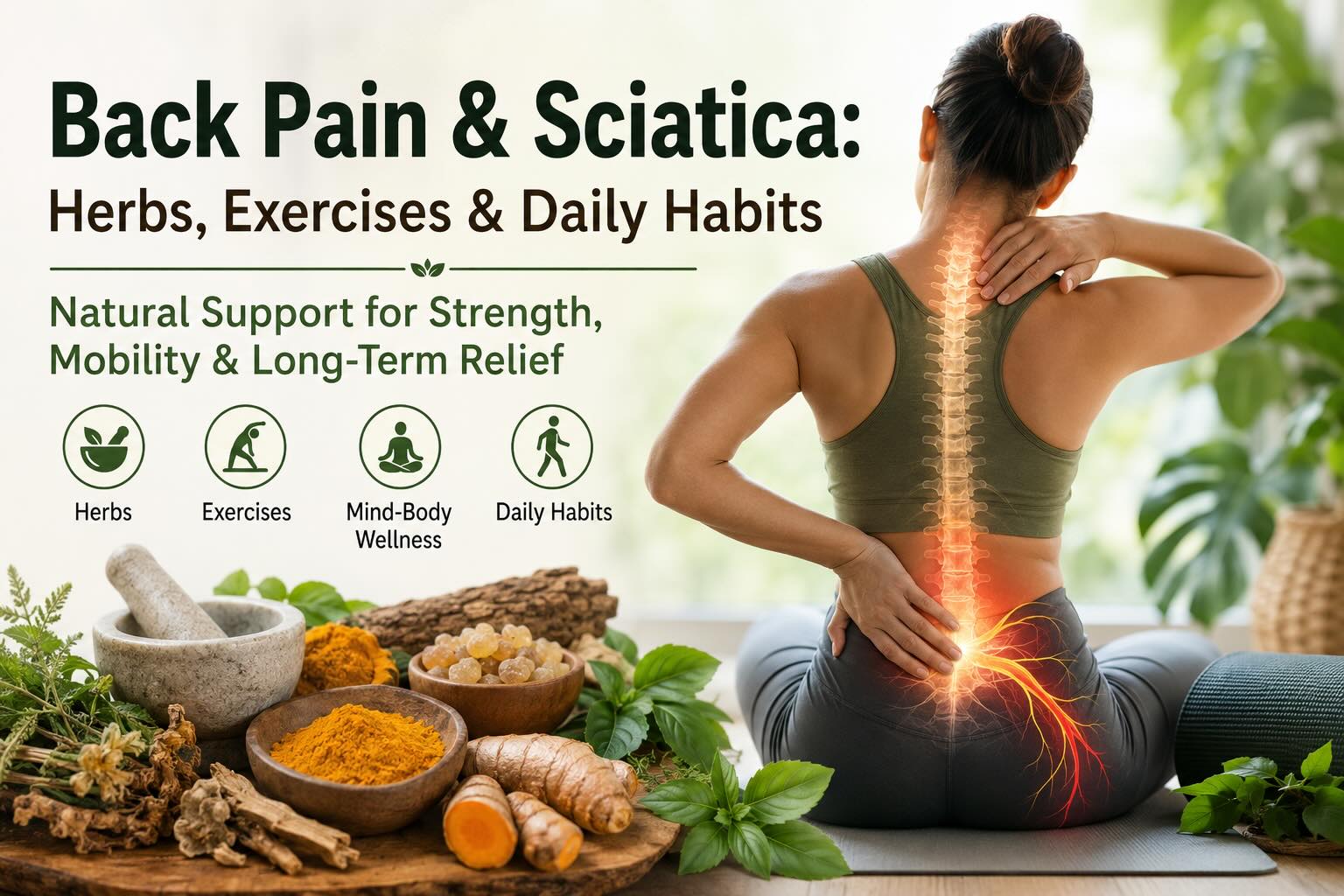
Back pain is one of the most common reasons people slow down, sit more, sleep poorly, or avoid activities they love. Sometimes the discomfort stays in the lower back. Other times it travels into the hip, buttock, back of the thigh, calf, or foot — a pattern often called sciatica.[1]
The good news: many cases of everyday low back discomfort improve with gentle movement, better daily habits, time, and consistent self-care.[2] Herbs can also play a supportive role for comfort, mobility, and a healthy inflammatory response. But the strongest long-term foundation is still movement: walking, gentle strengthening, mobility work, and learning which positions your body tolerates best.
Educational note: This article is for education only. It is not medical advice and is not intended to diagnose, treat, cure, or prevent any disease. Severe, worsening, or persistent pain should be evaluated by a qualified healthcare professional.
What Is Sciatica?
Sciatica is not just “back pain.” It usually means that the sciatic nerve or one of the nerve roots that forms it is irritated. The sciatic nerve runs from the lower spine through the buttock and down the back of the leg.[1]
Common signs may include:
- Pain traveling from the lower back or buttock into the leg
- Tingling, burning, numbness, or “electric” sensations
- Symptoms that worsen with long sitting, bending, lifting, or coughing
- Relief when walking, lying down, or changing position
The cause may be a disc irritation, spinal narrowing, muscle tension around the hip, inflammation, or a combination of factors. Because symptoms can come from different sources, the best approach is usually gentle, progressive, and individualized.
When to Seek Medical Care Urgently
Do not try to “stretch it out” if symptoms are severe or unusual. Seek medical care promptly if you have:
- New or worsening leg weakness
- Loss of bladder or bowel control
- Numbness in the groin or “saddle” area
- Fever, unexplained weight loss, or history of cancer
- Pain after a fall, accident, or major trauma
- Severe pain that does not improve with rest or position change
- Pain with progressive numbness, balance problems, or foot drop
Most back discomfort is not dangerous, but nerve symptoms deserve respect.[1]
The First Principle: Keep Moving, but Do Not Force
For many people, the old advice to rest in bed for days is not helpful. Clinical guidelines generally encourage staying active within tolerance.[2] That does not mean pushing through sharp pain. It means using gentle, repeatable movement to keep the back, hips, nerves, and circulation from becoming more sensitive.
A useful rule:
Movement is usually helpful if discomfort stays mild, does not travel farther down the leg, and settles within 24 hours.
Movement may be too aggressive if:
- Pain shoots farther down the leg
- Numbness or tingling increases
- You feel weaker afterward
- Symptoms flare for more than a day
- You need to hold your breath or brace hard to complete the exercise
For sciatica, the goal is often to calm the nerve, restore easy walking, and gradually rebuild strength.[3]
Walking: The Most Underrated Back Exercise
Walking is simple, but it is powerful. It gently moves the hips and spine, improves circulation, supports mood, and helps reduce stiffness. Research suggests that progressive walking combined with education may help reduce recurrence of low back pain.[2]
Start small:
- 5–10 minutes at an easy pace
- 1–3 times per day if needed
- Flat surface first
- Stop before symptoms flare
- Add time gradually before adding speed
For many people, several short walks are better than one long walk. If sciatica worsens with walking, reduce the time, try a slower pace, or speak with a physical therapist.
Gentle Exercises for Back Pain and Sciatica
The best exercise is the one your body tolerates. No single routine works for everyone. Below are gentle options commonly used in back-care programs.[2]
1. Diaphragmatic Breathing
Lie on your back with knees bent. Place one hand on the belly and one on the chest. Breathe slowly through the nose and let the belly rise gently. Exhale without forcing. Continue for 2–3 minutes.
Why it helps: pain often increases muscle guarding. Slow breathing can help the nervous system shift out of “alarm mode.”
2. Pelvic Tilts
Lie on your back with knees bent. Slowly flatten the lower back toward the floor, then gently release. Move smoothly.
Try 8–12 repetitions. This is not a strength exercise. It is a way to restore comfortable motion.
3. Cat–Cow
Begin on hands and knees. Slowly round the spine upward, then gently lower the belly and lift the chest. Keep the movement easy.
Try 6–10 repetitions. Avoid forcing end ranges. The goal is gentle circulation and mobility.
4. Sciatic Nerve Flossing
Sit tall on a chair. Slowly straighten one knee while gently lifting the toes toward you. Then bend the knee and relax the foot. Keep the movement light.[3]
Try 5–10 repetitions per side. Nerve flossing should feel like a gentle glide, not a hard stretch. Stop if it increases burning, tingling, or shooting pain.
5. Prone Press-Up or Sphinx Pose
Lie on your stomach. Prop yourself on your elbows, or gently press up with your hands while keeping hips relaxed. Hold briefly, then lower.
Try 5–8 gentle repetitions. This may help some people whose symptoms improve with extension. However, it is not right for everyone. If pain travels farther down the leg, stop.
6. Glute Bridge
Lie on your back with knees bent. Gently tighten the buttocks and lift the hips a few inches. Lower slowly.
Try 6–10 repetitions. The glutes are important partners for the lower back. Strong hips often reduce the demand on irritated back tissues.
7. Bird Dog
Begin on hands and knees. Extend one leg back while keeping the pelvis level. If tolerated, extend the opposite arm. Hold 2–3 seconds, then switch sides.
Try 5 repetitions per side. Keep the movement small and controlled. This trains stability without heavy spinal loading.
8. Piriformis / Figure-4 Stretch
Lie on your back. Cross one ankle over the opposite knee. Gently draw the legs toward the chest until you feel a mild stretch in the hip or buttock.
Hold 15–30 seconds. Do not force this stretch during an acute sciatic flare. If it increases leg symptoms, skip it.[3]
9. Hip Flexor Stretch
Kneel on one knee or stand in a split stance. Gently shift the pelvis forward until you feel a stretch in the front of the hip.
Hold 15–30 seconds per side. Tight hip flexors can increase lower-back tension, especially after long sitting.
10. Supported Child’s Pose
Kneel and sit back toward the heels, resting the torso over a pillow or cushion. Breathe slowly.
Hold 30–60 seconds if comfortable. This may feel soothing for some people, but those with disc-related sciatica may prefer extension-based positions instead.
A Simple 10-Minute Daily Routine
Try this easy sequence once per day:
- Diaphragmatic breathing — 2 minutes
- Pelvic tilts — 10 reps
- Cat–cow — 8 reps
- Sciatic nerve flossing — 5 gentle reps per side
- Glute bridge — 8 reps
- Easy walk — 5–10 minutes
As symptoms improve, gradually add walking time and light strengthening.[2]
What About Yoga, Tai Chi, Massage, and Acupuncture?
Mind-body practices may help some people with chronic low back discomfort. Yoga can support flexibility, breathing, strength, and body awareness. Tai chi combines slow movement, balance, and relaxation. Massage may reduce short-term muscle tension. Acupuncture and spinal manipulation are also included in some clinical guidelines as options for certain people.[2]
The key is quality and personalization. A yoga class designed for athletes may not be appropriate during a sciatic flare. Choose gentle, back-aware instruction and avoid poses that increase leg symptoms.
Herbs Traditionally Used for Back Comfort
Herbs are not a replacement for medical evaluation, exercise, or physical therapy. They also do not “fix” a compressed nerve or structural spine problem. However, certain botanicals have been studied for low back discomfort, joint comfort, muscle tension, or healthy inflammatory pathways.[4]
White Willow Bark
White willow bark naturally contains salicin-related compounds. It has been studied for short-term low back pain support. Because it is related to salicylates, it should be used cautiously by people who are allergic to aspirin, taking blood thinners, have stomach ulcers, are pregnant, or are preparing for surgery.[5]
Devil’s Claw
Devil’s claw has a long history of use for musculoskeletal comfort. Some studies and reviews suggest benefit for short-term low back discomfort, especially when standardized extracts are used.[4] People with ulcers, gallbladder issues, diabetes medications, blood thinners, or pregnancy should speak with a healthcare professional first.[5]
Turmeric
Turmeric contains curcuminoids, compounds studied for their role in healthy inflammatory signaling. Turmeric is widely used in food and traditional wellness practices. Supplement forms may be stronger than culinary use and may interact with blood thinners or aggravate reflux or gallbladder issues in some people.[5]
Boswellia
Boswellia serrata, also known as Indian frankincense, contains boswellic acids. It is often used in formulas for joint comfort, flexibility, and healthy inflammatory response. Research is growing, including studies combining boswellia with turmeric for musculoskeletal discomfort.[4]
Ginger
Ginger is warming, digestive, and traditionally used for circulation and comfort. It may be especially helpful as part of a daily wellness routine, but high supplemental amounts may not be appropriate with blood-thinning medications or before surgery.[5]
Ashwagandha
Ashwagandha is an adaptogenic herb traditionally used for stress resilience. Back discomfort is not only mechanical; stress, poor sleep, and nervous-system tension can amplify pain perception. Ashwagandha may support calm and recovery, but it is not appropriate for everyone, especially during pregnancy or with certain thyroid, autoimmune, liver, or sedative-medication concerns.[5]
Valerian and Chamomile
Valerian and chamomile are traditionally used for relaxation and sleep support. Since poor sleep can increase pain sensitivity, calming herbs may support the body’s recovery rhythm. Use caution with sedatives, alcohol, or activities requiring alertness.[5]
A Food-Based Comfort Strategy
Daily food choices can support tissue recovery, healthy weight, and a balanced inflammatory response. Consider:
- Colorful vegetables and berries
- Leafy greens
- Lentils, beans, and plant proteins
- Ground flax, chia, walnuts, or other omega-3-rich plant foods
- Turmeric, ginger, garlic, rosemary, and other culinary herbs
- Adequate water and electrolytes
- Less ultra-processed food, refined sugar, and excess alcohol
No food works overnight. The goal is steady support for the body’s repair systems.
Lifestyle Habits That Matter
Break Up Sitting
Long sitting can aggravate both low back pain and sciatica. Try standing or walking for 2–5 minutes every 30–45 minutes.
Lift With Respect
Bring the object close. Exhale gently. Use hips and legs. Avoid twisting while loaded.
Sleep Position
Side sleeping with a pillow between the knees may help. Back sleeping with a pillow under the knees may also reduce tension.
Heat or Cold
Heat may relax tight muscles. Cold may feel better when pain is sharp or recently irritated. Use what gives relief, and protect the skin.
Stress Downshift
Pain is processed by the nervous system. Breathwork, prayer, meditation, gentle walking, and time outdoors can help calm the body’s alarm response.
A Balanced Natural Approach
For most people, the best natural strategy is not one herb or one stretch. It is a combination:
- Keep moving within tolerance
- Walk daily if possible
- Build hip and core strength gradually
- Use gentle nerve mobility when appropriate
- Support sleep and stress resilience
- Choose herbs thoughtfully and safely
- Ask for professional help when symptoms are severe, persistent, or neurological
Back pain and sciatica can feel discouraging, but the body often responds well to small, consistent actions. Start gently. Track what helps. Build from there.
Product Safety Note
Herbal supplements may interact with medications and may not be suitable during pregnancy, breastfeeding, before surgery, with bleeding disorders, ulcers, gallbladder disease, liver or kidney conditions, or when taking blood thinners, diabetes medications, sedatives, or other prescriptions.[5] Always check with a qualified healthcare professional before starting a new supplement, especially if you have a medical condition or take medication.
These statements have not been evaluated by the Food and Drug Administration. This article is for educational purposes only and is not intended to diagnose, treat, cure, or prevent any disease.
Footnotes
- Low back pain and sciatica can come from different causes. Persistent nerve symptoms, weakness, numbness, or bladder/bowel changes require professional evaluation.
- Exercise for low back pain works best when individualized. Walking, strengthening, mobility work, yoga, and nerve-gliding techniques may help different people in different ways.
- For sciatica, avoid aggressive stretching. Nerves usually prefer gentle movement, not force.
- Herbal research depends heavily on the exact extract, dose, standardization, and study design. Results from one standardized extract do not automatically apply to every product.
- “Natural” does not always mean risk-free. Willow bark, turmeric, devil’s claw, ginger, valerian, and other herbs may interact with medications or medical conditions.
Scientific References
- Qaseem A, Wilt TJ, McLean RM, Forciea MA. “Noninvasive Treatments for Acute, Subacute, and Chronic Low Back Pain: A Clinical Practice Guideline From the American College of Physicians.” Annals of Internal Medicine, 2017.
https://pubmed.ncbi.nlm.nih.gov/28192789/ - NICE Guideline NG59. “Low back pain and sciatica in over 16s: assessment and management.”
https://www.nice.org.uk/guidance/ng59 - Hayden JA, Ellis J, Ogilvie R, et al. “Exercise therapy for chronic low back pain.” Cochrane Database of Systematic Reviews, 2021.
https://pubmed.ncbi.nlm.nih.gov/34580864/ - Pocovi NC, Lin CW, French SD, et al. “Effectiveness and cost-effectiveness of an individualised, progressive walking and education intervention for the prevention of low back pain recurrence in Australia: a randomised controlled trial.” The Lancet, 2024.
https://pubmed.ncbi.nlm.nih.gov/38908392/ - Lin LH, Lin TY, Chang KV, et al. “Neural Mobilization for Reducing Pain and Disability in Patients With Lumbar Radiculopathy: A Systematic Review and Meta-Analysis.” 2023.
https://pmc.ncbi.nlm.nih.gov/articles/PMC10744707/ - Lam OT, Strenger DM, Chan-Fee M, et al. “Effectiveness of the McKenzie Method of Mechanical Diagnosis and Therapy for Treating Low Back Pain: Literature Review With Meta-analysis.” 2018.
https://pubmed.ncbi.nlm.nih.gov/29602304/ - Wieland LS, Skoetz N, Pilkington K, et al. “Yoga treatment for chronic non-specific low back pain.” Cochrane Database of Systematic Reviews, 2017.
https://pubmed.ncbi.nlm.nih.gov/28076926/ - Oltean H, Robbins C, van Tulder MW, Berman BM, Bombardier C, Gagnier JJ. “Herbal medicine for low-back pain.” Cochrane Database of Systematic Reviews, 2014.
https://pmc.ncbi.nlm.nih.gov/articles/PMC7197042/ - Gagnier JJ, van Tulder M, Berman B, Bombardier C. “Herbal medicine for low back pain.” Cochrane Database of Systematic Reviews, 2006.
https://pubmed.ncbi.nlm.nih.gov/16625605/ - Vlachojannis JE, Cameron M, Chrubasik S. “A systematic review on the effectiveness of willow bark for musculoskeletal pain.” Phytotherapy Research, 2009.
https://pubmed.ncbi.nlm.nih.gov/19140170/ - Brien S, Lewith GT, McGregor G. “Devil’s Claw as a treatment for low back pain and osteoarthritis.” Phytotherapy Research, 2006.
https://pubmed.ncbi.nlm.nih.gov/17212570/ - Keitel W, Frerick H, Kuhn U, et al. “Capsicum pain plaster in chronic non-specific low back pain.” Arzneimittelforschung, 2001.
https://pubmed.ncbi.nlm.nih.gov/14581111/ - National Center for Complementary and Integrative Health. “Low-Back Pain and Complementary Health Approaches: What You Need To Know.”
https://www.nccih.nih.gov/health/low-back-pain-and-complementary-health-approaches-what-you-need-to-know - National Center for Complementary and Integrative Health. “Turmeric: Usefulness and Safety.”
https://www.nccih.nih.gov/health/turmeric