
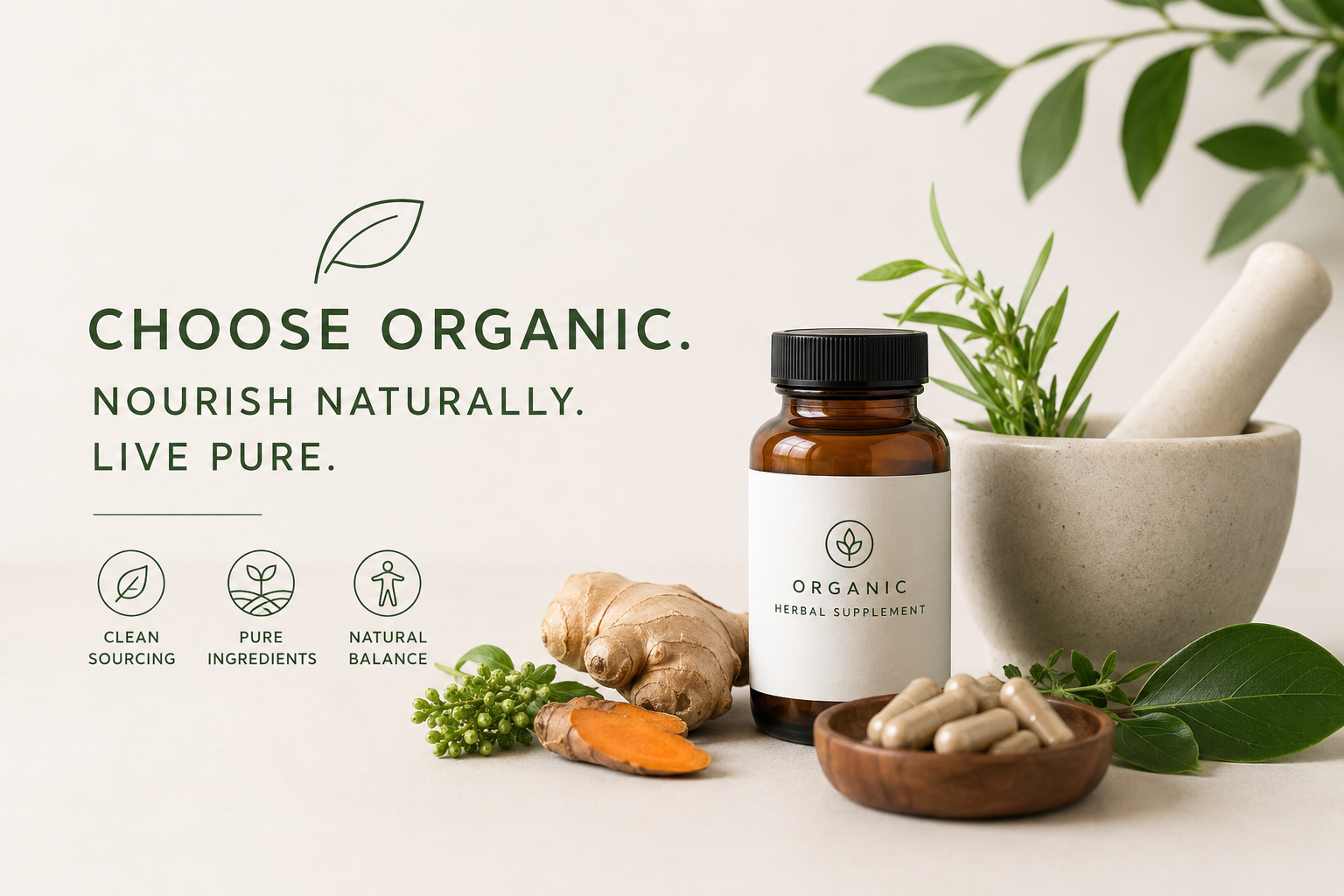
Organic is not just a label. It is a philosophy of purity — choosing food and herbs that work with the body, not against it.
Educational article from the VeggieVerve Knowledge Base.
The Modern Body Is Exposed to More Than Food
Every day, the modern body is exposed to many substances that previous generations rarely encountered in such amounts. These may include pesticide residues, artificial colors, synthetic preservatives, fragrance chemicals, industrial pollutants, heavy metals, plastic-related compounds, and highly processed food additives.
Some of these exposures come from the environment. Some come from city living. Some come from food, water, air, packaging, personal care products, cleaning products, or supplements made with low-quality ingredients.
The body is intelligent and constantly works to process, transform, and eliminate what it does not need. The liver, kidneys, digestive system, lymphatic system, skin, and lungs all participate in this natural cleansing process. But when the body is repeatedly exposed to substances it does not recognize as food, the overall burden may increase.
Non-Organic Food and Herbs May Carry a Heavier Chemical Burden
Non-organic food and herbs are not automatically unsafe. However, they may be grown with synthetic pesticides, herbicides, fertilizers, fumigants, or other agricultural chemicals that are not allowed, or are much more restricted, under organic standards.
With herbs and supplements, this becomes especially important. Herbs are often concentrated into liquid extracts, capsules, powders, teas, or tonics. If the original plant material was exposed to unwanted chemicals, poor soil conditions, or environmental contaminants, those concerns may become more meaningful in a concentrated product.
Heavy metals such as lead, cadmium, arsenic, and mercury are another concern in the food and supplement world. These elements may enter plants through soil, water, pollution, or poor sourcing practices. The FDA monitors toxic elements in foods and dietary supplements because long-term exposure is a public health concern.
This is one reason pure sourcing matters. A supplement is only as clean as the herbs, soil, water, harvesting, drying, extraction, and handling behind it.
Foreign Compounds and the Body’s Natural Cycles
The human body is designed to recognize and use natural nutrients from whole foods, herbs, fruits, roots, leaves, seeds, and minerals. These natural compounds often come together in complex combinations that the body has interacted with for thousands of years.
Synthetic additives and environmental chemicals are different. Many are relatively new to the human diet and environment. The body may need to neutralize, transform, store, or eliminate these compounds through its natural detoxification pathways.
When exposure is occasional, the body often manages well. But when exposure is repeated over time — from food additives, artificial colors, pesticide residues, synthetic fragrance, polluted air, processed foods, or contaminated supplements — the body may experience a greater “body burden.”
Some persistent environmental compounds can accumulate in body tissues. Others may interfere with normal biological signaling, oxidative balance, hormonal balance, cellular communication, or inflammatory pathways. Research continues to explore how long-term chemical exposure may influence human health.
Simple idea: the fewer unnecessary synthetic inputs the body must process, the more energy it may have for natural repair, renewal, digestion, elimination, and daily vitality.
City Living and Everyday Toxic Load
Living in a city has many benefits, but it also brings unavoidable exposures. Air pollution, vehicle exhaust, treated water, packaging materials, processed foods, artificial fragrances, cleaning chemicals, and environmental residues can all become part of daily life.
Even with a healthy lifestyle, it is difficult to avoid every unwanted compound. We may consume them in small amounts through food additives, artificial colors, preservatives, plastic packaging, non-organic produce, or low-quality supplements.
This is why organic choices matter. They are not about fear or perfection. They are about reducing avoidable exposure where we can.
Choosing organic food and organic herbal supplements is one practical way to lower the number of unnecessary synthetic compounds entering the body on a regular basis.
Organic Food Works More Naturally With the Body
Organic food is closer to the natural pattern of life. It is grown with attention to soil, plant integrity, ecological balance, and fewer synthetic agricultural inputs.
When we eat clean, natural, organic foods, we give the body familiar materials: vitamins, minerals, fiber, enzymes, antioxidants, polyphenols, natural sugars, plant pigments, bitter compounds, and phytonutrients.
These compounds are not isolated “foreign” substances. They are part of the natural language of plants. The body can use them for energy, nourishment, cellular protection, digestion, elimination, and renewal.
This is why many people feel that organic food gives a cleaner kind of energy — energy that comes from nourishment rather than stimulation, and from purity rather than chemical interference.
Why Organic Herbs and Supplements Matter Even More
Supplements are different from ordinary foods because they are often concentrated. A small serving of a liquid herbal formula, powder, capsule, or tincture may contain the concentrated essence of many plants.
This concentration is one reason herbal supplements can be valuable. But it is also why ingredient quality matters so much.
If herbs are clean, carefully sourced, and organically grown, the final formula begins with a better foundation. If herbs are poorly sourced, contaminated, or grown with heavy chemical inputs, the final supplement may carry unwanted substances along with the beneficial plant compounds.
Organic herbal supplements matter because they help preserve the original purpose of herbal wellness: to support the body with plants, not burden it with unnecessary synthetic residues.
Organic Is Not Just “No Chemicals”
Everything in nature has chemistry. Water, apples, herbs, minerals, and human cells are all made of chemical compounds. So the goal is not to avoid “chemistry.”
The real question is: what kind of chemistry are we choosing?
Natural plant chemistry comes from living systems. Synthetic additives, artificial colors, industrial residues, pesticide chemicals, and certain contaminants may not fit the body’s natural rhythm in the same way.
Organic living is about choosing chemistry that belongs to life: soil, plants, sunlight, minerals, water, roots, leaves, fruits, seeds, and natural transformation.
Organic and Cellular Wellness
Every cell in the body depends on clean inputs. Cells need oxygen, water, minerals, amino acids, fatty acids, vitamins, antioxidants, and plant compounds to function properly.
At the same time, cells are constantly exposed to stressors — oxidative stress, inflammation, environmental pollutants, processed foods, and synthetic compounds. Over time, these stressors may influence cellular communication, repair, immune balance, and overall vitality.
Organic food may help create a cleaner internal environment by reducing avoidable chemical exposure and providing natural compounds that support the body’s normal wellness processes.
In simple words: the cleaner the input, the cleaner the foundation.
The Energy Difference: Clean Fuel vs. Chemical Burden
The body is always producing energy. But energy is not only about calories. It is also about how efficiently the body can digest, absorb, transform, and use what we consume.
Highly processed foods may provide calories, but they can also come with artificial additives, refined sugars, damaged oils, preservatives, colorings, and flavoring agents that the body must process.
Organic whole foods and organic herbs offer a different kind of support. They bring nutrients and plant compounds in a form that is closer to nature. For many people, this feels like cleaner, steadier energy — without the heaviness that can come from overly processed or chemically burdened foods.
Organic is about giving the body better fuel and fewer unnecessary obstacles.
What Organic Certification Helps Protect Against
In the United States, certified organic products are regulated under the USDA National Organic Program. Organic standards restrict or prohibit many practices commonly associated with conventional agriculture.
USDA organic standards generally prohibit most synthetic fertilizers and pesticides, sewage sludge, irradiation, genetic engineering, and many synthetic processing substances. Organic certification also requires specific production and handling practices designed to reduce commingling with non-organic products.
This does not mean organic products are completely free from every environmental contaminant. Nature, soil, water, and air can still carry pollutants. But organic certification creates a higher standard of accountability compared with vague marketing terms such as “natural,” “clean,” or “pure.”
The VeggieVerve Perspective
At VeggieVerve, we believe the body is not a machine that should be forced. It is a living system that should be supported.
Organic herbal supplements fit this philosophy because they begin with respect — respect for soil, respect for plants, respect for purity, and respect for the body’s natural intelligence.
Our goal is not to promise miracles. Our goal is to offer plant-based formulas that align with the body’s natural flow: cleansing, nourishment, balance, renewal, and vitality.
Organic matters because what we put into the body becomes part of the body’s daily work. Cleaner ingredients mean fewer unnecessary burdens and a better foundation for long-term wellness.
Final Thought
We cannot avoid every unwanted compound in modern life. But we can choose better where we have control.
Organic food and organic herbal supplements matter because they help reduce avoidable chemical exposure, support cleaner nourishment, and work more naturally with the body’s own rhythms.
The body already knows how to heal, cleanse, renew, and create energy. Organic living simply gives it a cleaner path.
Educational Note
This article is for educational purposes only and is not intended to diagnose, treat, cure, or prevent any disease. Organic foods and herbal supplements are not a substitute for medical care, a varied diet, or professional health advice. Always consult a qualified healthcare professional before using herbal supplements, especially if you are pregnant, nursing, taking medication, or managing a health condition.
References & Further Reading
- USDA Agricultural Marketing Service — Allowed and Prohibited Substances in Organic Production. https://www.ams.usda.gov/publications/content/allowed-prohibited-substances
- USDA — Organic 101: What the USDA Organic Label Means. https://www.usda.gov/about-usda/news/blog/organic-101-what-usda-organic-label-means
- FDA — Environmental Contaminants in Food. https://www.fda.gov/food/chemical-contaminants-pesticides/environmental-contaminants-food
- FDA — Testing Results for Arsenic, Lead, Cadmium and Mercury. https://www.fda.gov/food/environmental-contaminants-food/testing-results-arsenic-lead-cadmium-and-mercury
- Barański M, et al. Higher antioxidant and lower cadmium concentrations and lower incidence of pesticide residues in organically grown crops: a systematic literature review and meta-analysis. British Journal of Nutrition. 2014. https://pubmed.ncbi.nlm.nih.gov/24968103/
- National Center for Complementary and Integrative Health — Dietary and Herbal Supplements. https://www.nccih.nih.gov/health/dietary-and-herbal-supplements
- National Center for Complementary and Integrative Health — Using Dietary Supplements Wisely. https://www.nccih.nih.gov/health/using-dietary-supplements-wisely