
VeggieVerve Knowledge Base
What is your body asking for today?
Lymphatic Drainage: The Forgotten Detox Pathway
Table of Contents
- What Is the Lymphatic System?
- Why Lymph Flow Matters for Detox
- Why the Lymphatic System Is Often Forgotten
- Signs Your Body May Need More Lymph-Supportive Habits
- 7 Gentle Ways to Support Lymphatic Drainage Naturally
- A Simple Daily Lymph-Support Routine
- What About Dry Brushing?
- When to Be Careful
- The Bottom Line
- References
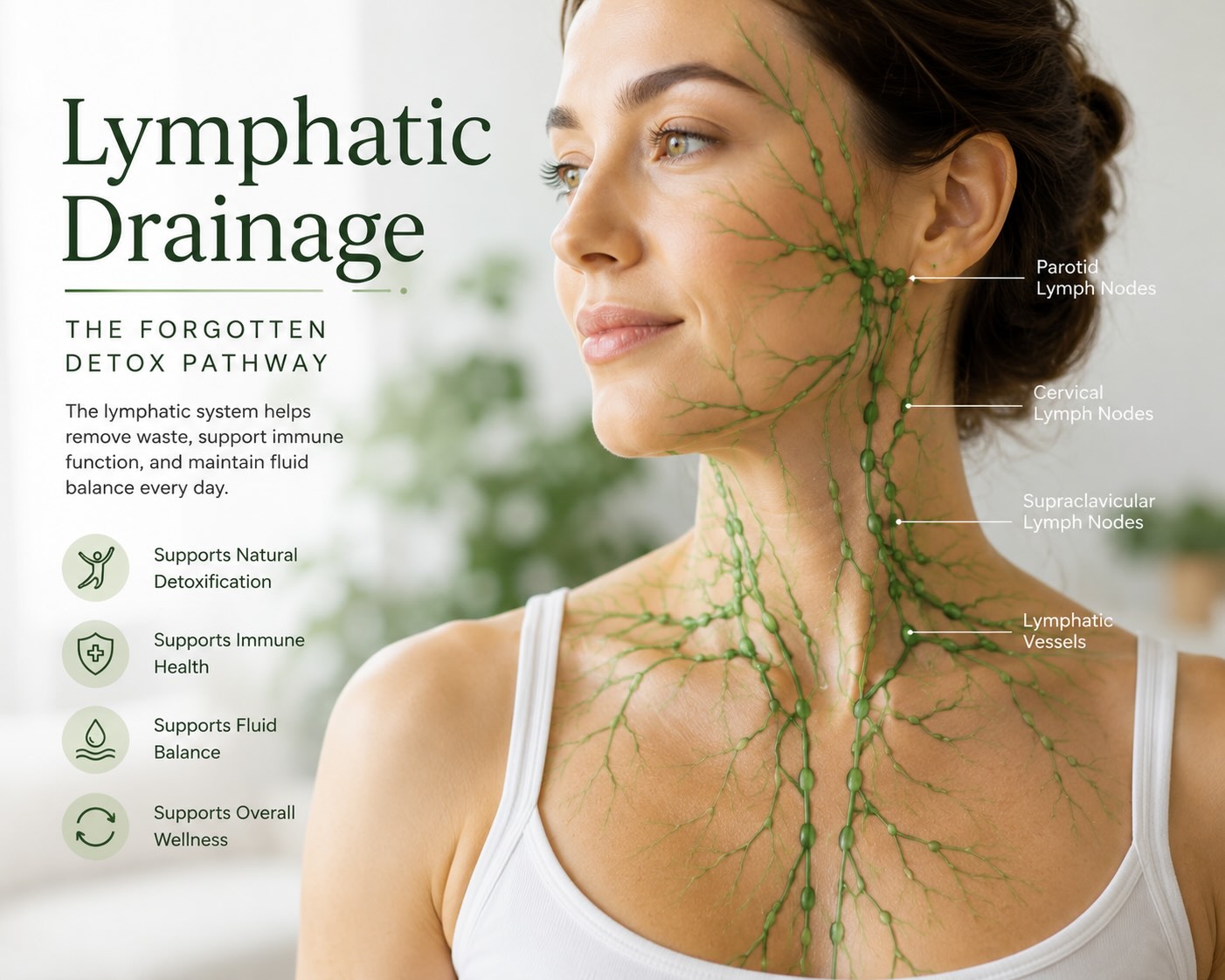
When people think about detox, they often focus on the liver, colon, or kidneys. But there is another important system working quietly every day: the lymphatic system.
The lymphatic system is sometimes called the body’s “drainage network.” It helps move excess fluid from tissues, supports immune surveillance, and carries waste products toward elimination pathways. Unlike the heart, which pumps blood, the lymphatic system depends heavily on movement, breathing, muscle contraction, hydration, and natural body rhythm.
In other words, lymphatic drainage is not a trendy idea. It is part of how the body maintains balance every day.
What Is the Lymphatic System?
The lymphatic system is a network of vessels, lymph nodes, organs, and fluid called lymph. This fluid moves through the body, collecting excess fluid, proteins, cellular waste, and other materials from the spaces between cells.
Lymph then passes through lymph nodes, where immune cells help monitor what is moving through the body. From there, lymph eventually returns to the bloodstream.
This makes the lymphatic system closely connected with:
- Fluid balance
- Immune system activity
- Waste transport
- Fat absorption from digestion
- Natural cleansing and elimination pathways
Why Lymph Flow Matters for Detox
Detox is not only about what leaves the body. It is also about how well the body moves fluids and waste through the right channels.
The lymphatic system acts like a collection and transport system. When lymph flow is supported, the body can more efficiently move fluid and by-products away from tissues and toward normal elimination routes.
This does not mean the lymphatic system “cures” anything or replaces medical care. It means that healthy lymph movement is one piece of the body’s natural cleansing design.
The liver processes. The kidneys filter. The colon eliminates. The skin releases. The lymphatic system helps move fluid and waste toward those pathways.
Why the Lymphatic System Is Often Forgotten
The lymphatic system does not get as much attention as digestion, liver health, or immunity because it works silently in the background. You do not usually feel it working the way you feel digestion or breathing.
But lifestyle can influence lymph movement. Long periods of sitting, shallow breathing, dehydration, low movement, and poor sleep may all make the body feel less “flowing” and more stagnant.
That is why many natural wellness traditions place importance on movement, massage, sweating, hydration, and herbs that support circulation, elimination, and internal balance.
Signs Your Body May Need More Lymph-Supportive Habits
The following are not medical diagnoses, and they can have many causes. But they may be signals that your daily routine could use more movement, hydration, and cleansing support:
- Feeling heavy or puffy after sitting for long periods
- Low energy or sluggishness
- Occasional morning puffiness
- Feeling “stagnant” after travel or low activity
- Slow recovery after heavy meals or stressful periods
- A desire to support natural cleansing pathways more consistently
If swelling is sudden, painful, one-sided, severe, or connected with shortness of breath, chest pain, infection, injury, or a known medical condition, it is important to seek medical care.
7 Gentle Ways to Support Lymphatic Drainage Naturally
1. Move Your Body Daily
Lymph does not have a central pump like the heart. Muscle contraction helps move lymph through the vessels. Walking, stretching, cycling, yoga, light jogging, rebounding, and bodyweight exercise can all support healthy flow.
Even short movement breaks during the day can help. If you sit for long hours, try standing up every 30–60 minutes and walking for a few minutes.
2. Breathe Deeply
Deep breathing changes pressure in the chest and abdomen, which may support lymph movement. Slow breathing also helps shift the body toward a calmer state, which supports overall balance.
Try this simple practice:
- Inhale slowly through the nose for 4 seconds
- Let the belly expand gently
- Exhale slowly for 6 seconds
- Repeat for 2–5 minutes
3. Stay Hydrated
Lymph is fluid, so hydration matters. Water helps maintain normal fluid movement throughout the body. A good daily routine may include clean water, herbal teas, mineral-rich foods, fruits, vegetables, and broths.
For many people, the goal is not extreme water intake, but steady hydration throughout the day.
4. Support Regular Elimination
The lymphatic system works together with the body’s elimination pathways. The colon, kidneys, liver, and skin all play a role in removing what the body no longer needs.
Fiber-rich plant foods, hydration, gentle movement, and cleansing herbs can help support regularity and natural elimination.
5. Use Gentle Massage or Bodywork
Manual lymphatic drainage is a specialized technique used by trained practitioners, especially in clinical settings such as lymphedema care. At home, gentle self-massage may also help you feel relaxed and more connected to your body.
Keep pressure light. Lymph vessels are close to the surface, so aggressive pressure is not necessary. Always avoid massaging areas that are painful, infected, inflamed, or medically restricted.
6. Sweat Gently
Sweating through exercise, sauna, or warm baths can support the skin’s natural elimination role. Sweating should feel comfortable, not forced. Rehydrate afterward and listen to your body.
If you have heart concerns, blood pressure issues, pregnancy, kidney disease, or other medical conditions, speak with a healthcare professional before using sauna or intense heat therapy.
7. Consider Herbal Lymphatic Support
Herbs have long been used in traditional wellness systems to support fluid movement, cleansing routines, digestion, and elimination. A lymphatic-focused herbal formula may be a helpful addition to a broader routine that includes movement, hydration, clean food, and rest.
The goal is not to force the body into a harsh cleanse. The goal is to gently support the body’s natural pathways so they can do what they are designed to do.
Featured Support: Lymphatic Drainage Power Cleanse
VeggieVerve’s Lymphatic Drainage Power Cleanse is designed for those who want to support natural cleansing routines with plant-based herbal ingredients. It pairs best with daily movement, hydration, regular elimination, and a clean, fiber-rich diet.
A Simple Daily Lymph-Support Routine
You do not need an extreme cleanse to support lymphatic flow. Start with a simple daily rhythm:
- Morning: Drink water, stretch, and take a short walk
- Midday: Move your legs, breathe deeply, and avoid sitting too long
- Evening: Eat a clean, plant-rich meal and support regular elimination
- Weekly: Add sauna, gentle massage, yoga, rebounding, or longer walks if they feel good for you
The best lymphatic routine is the one you can repeat. Consistency matters more than intensity.
What About Dry Brushing?
Dry brushing is popular in natural wellness routines. It may help exfoliate the skin and may create a feeling of improved circulation. However, strong scientific evidence for dry brushing as a proven lymphatic drainage method is limited.
If you enjoy dry brushing, use it gently. Brush toward the heart, avoid irritated skin, and do not use it as a replacement for medical care, movement, hydration, or professional lymphatic therapy when needed.
When to Be Careful
Lymphatic swelling and fluid retention can sometimes be related to medical conditions. Speak with a healthcare professional if you have:
- Sudden swelling
- One-sided leg or arm swelling
- Pain, redness, warmth, or infection
- Shortness of breath or chest discomfort
- Known heart, kidney, liver, or lymphatic disease
- Swelling after surgery or cancer treatment
- Pregnancy-related swelling that feels unusual or severe
Natural support is best used wisely. If symptoms are strong, persistent, or unusual, it is better to get medical guidance.
The Bottom Line
The lymphatic system is one of the body’s most overlooked detox pathways. It helps maintain fluid balance, supports immune activity, and moves materials through the body’s natural cleansing network.
Supporting lymph flow does not require harsh detox methods. Gentle movement, deep breathing, hydration, regular elimination, sweating, massage, and herbal support can all be part of a balanced lymphatic wellness routine.
Detox is not about forcing the body. It is about helping the body’s natural pathways stay open, moving, and supported.
References
- National Center for Biotechnology Information. Anatomy, Lymphatic System.
https://www.ncbi.nlm.nih.gov/books/NBK513247/ - National Center for Biotechnology Information. Physiology, Lymphatic System.
https://www.ncbi.nlm.nih.gov/books/NBK557833/ - Scallan JP, et al. Lymphatic pumping: mechanics, mechanisms and malfunction.
https://pmc.ncbi.nlm.nih.gov/articles/PMC5063934/ - Vairo GL, et al. Systematic Review of Efficacy for Manual Lymphatic Drainage Techniques in Sports Medicine and Rehabilitation.
https://pmc.ncbi.nlm.nih.gov/articles/PMC2755111/ - Cleveland Clinic. Lymphatic System: Function, Conditions & Disorders.
https://my.clevelandclinic.org/health/body/21199-lymphatic-system
Educational note: This article is for general wellness education only and is not intended to diagnose, treat, cure, or prevent any disease. Always consult a qualified healthcare professional for medical concerns or before starting a new supplement routine, especially if you are pregnant, nursing, taking medication, or managing a health condition.
- Choosing a selection results in a full page refresh.
- Opens in a new window.